Khyber Pass
The Khyber Pass is the historic mountain pass connecting Afghanistan and Pakistan, a narrow, winding route through the Sulaiman Mountains that has served for centuries as the primary land corridor between Central and South Asia. In The Kite Runner, the pass functions as the physical and symbolic threshold between Amir's American exile and the Afghan past he has tried to bury, crossed twice under radically different circumstances: once as a refugee fleeing the Soviet occupation in 1981, and again twenty years later as a man returning to confront his sins.
Geography and Character
The Khyber Pass is a rugged, winding route through cliffs of shale and limestone, dotted with old fortresses, adobe-walled and crumbling, that top the crags. The drive through the tribal lands of the Khyber Pass, winding between deep gorges and soaring to jagged peaks, is arduous and disorienting. The pass descends from Landi Kotal through Shinwari territory to Landi Khana, entering Afghanistan at Torkham. The terrain is arid and imposing, with the snowcapped Hindu Kush visible to the north. The pass is as famous for its terrain as for the bandits who use that terrain to rob travelers, a danger that Wahid, Farid's brother, mentions when Amir arrives in Jalalabad.
The Escape from Kabul (1981)
In March 1981, Amir and Baba crossed the Khyber Pass as refugees, hidden in the tarpaulin-covered cab of an old Russian truck driven by a people smuggler named Karim. The journey was terrifying: Amir suffered from car sickness, vomiting repeatedly, and the truck was stopped at a checkpoint at Mahipar where a drunken Russian soldier demanded a half hour with a young woman passenger. Baba stood up to the soldier, nearly getting himself shot, and only the intervention of a second Russian officer saved them. The crossing marked the end of Amir's childhood and the beginning of his American life, a passage from the war-torn Kabul of his youth into an uncertain future.
The Return Journey (2001)
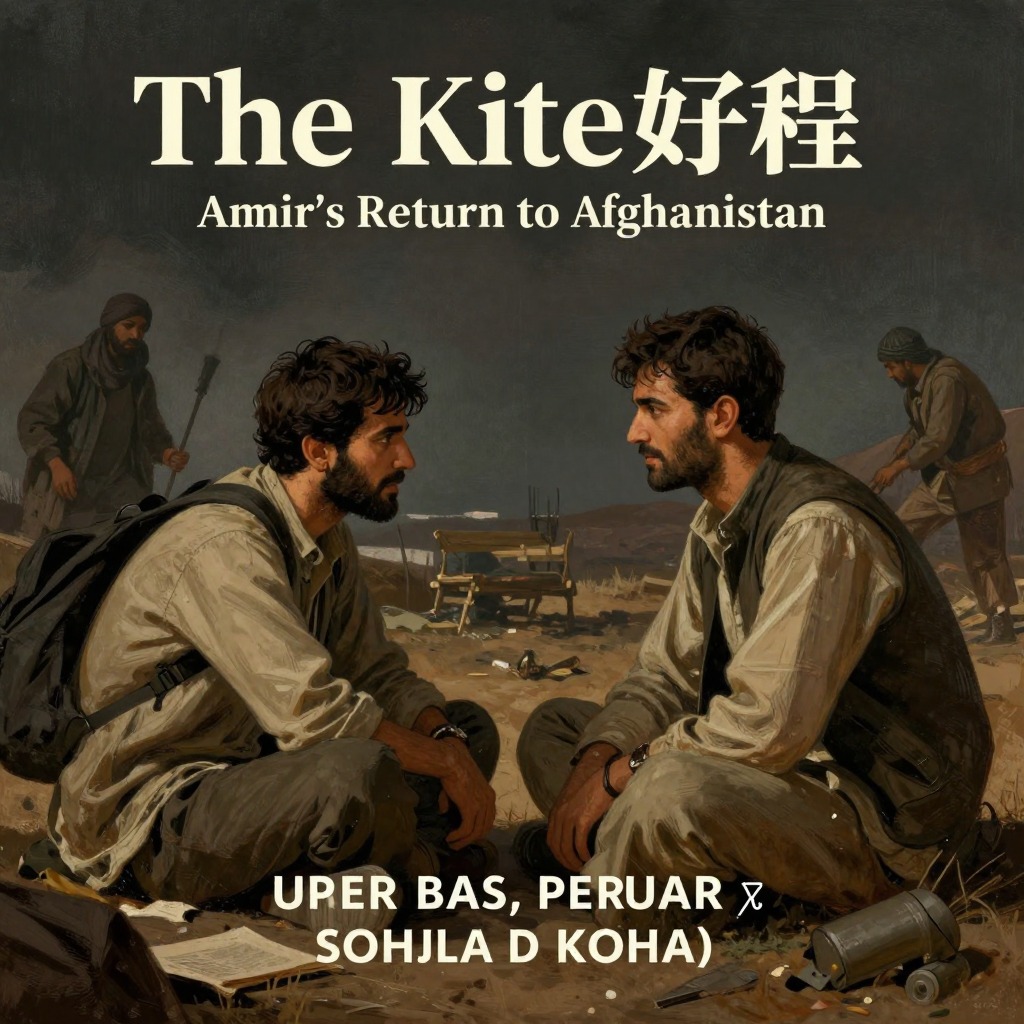
Twenty years later, Amir crossed the Khyber Pass again, this time in the opposite direction, driven by Farid, a Tajik who had fought in the jihad against the Soviets. The bullet-riddled sign reading "THE KHYBER PASS WELCOMES YOU" greeted them as they drove past. Amir's car sickness returned immediately, and Farid, initially hostile and contemptuous, offered him a lemon as an old watani trick to settle his stomach. The pass was the same broken terrain Amir remembered from 1974, but the poverty on either side was now overwhelming: chains of little villages sprouting like discarded toys among the rocks, broken mud houses, children dressed in rags chasing a soccer ball, and men sitting on the carcass of an old burned-out Soviet tank. The pass had become a relic of two wars, with burned carcasses of old Soviet tanks and overturned military trucks gone to rust strewn along the road.
Symbolic Significance
The Khyber Pass represents the physical and psychological border between Amir's two lives: the American life of comfort, marriage, and buried memories, and the Afghan life of guilt, loyalty, and the past that claws its way out. Crossing it eastward in 1981 was an escape from the death of the Afghanistan he knew; crossing it westward in 2001 was a return to face the consequences of his betrayal of Hassan. The pass is the threshold of the hero's journey, the point of no return that separates the ordinary world from the special world of ordeal and redemption. For Amir, each crossing of the Khyber Pass is a passage between identities, a journey that strips away the layers of his American self and forces him to confront the boy he was and the man he has become.